Over the past year, I’ve noticed a pattern across industries like SaaS, financial services, real estate, and professional services.
Marketing teams are strong at getting new leads in the door. Acquisition campaigns perform, pipelines fill, dashboards look good.
But somewhere between sign-up and renewal, momentum slips.
- Customers onboard slowly.
- Engagement fades after the first few weeks.
- Loyalty never develops into advocacy.
It’s not because teams don’t care. It’s because the customer journey has fragile handoffs. Each stage (marketing, sales, onboarding, and customer success) creates opportunities for customers to fall through the cracks. And they do, according to Forrester.
In 2026, with inboxes overflowing and AI-generated content multiplying by the second, those cracks become even wider.
The good news: they can be closed. In this guide, we’ll look at the five lifecycle gaps costing mid-market firms the most. You’ll also learn how to close them with strategies that make customers feel seen, guided, and valued.
Why Customer Journey Strategies Fail in 2025 (and Why 2026 Is Different)
Customer experience (CX) has been at the top of leadership priorities for years.
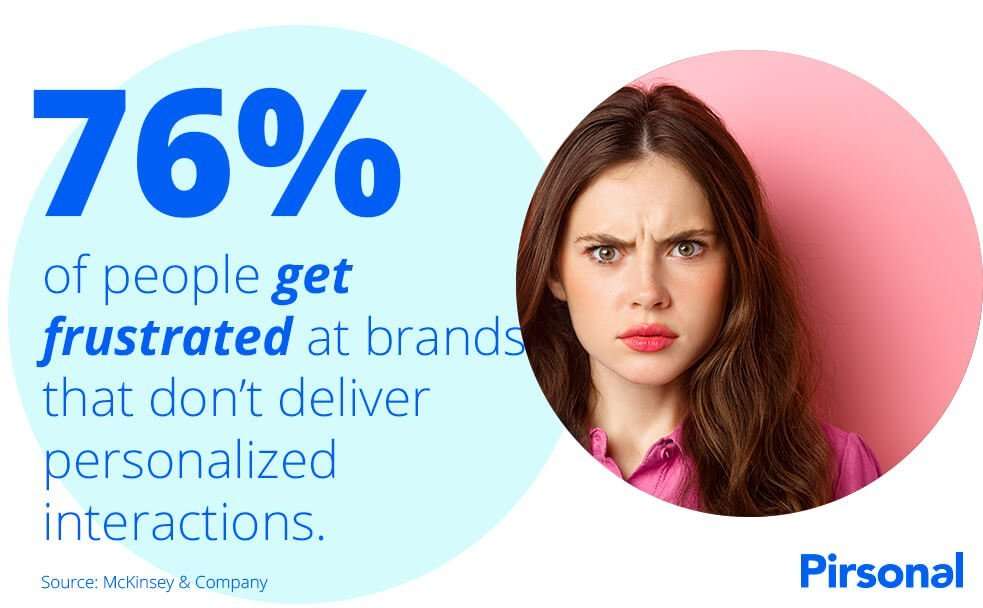
But the numbers tell a sobering story:
- 94% of executives say positive customer interactions are vital.
- Yet only 38% believe their company is very successful at delivering them.
That’s a massive gap.
Here’s why it keeps happening:
- Silos: Marketing, sales, onboarding, and customer success (CS) each run their own playbooks. Handoffs are inconsistent.
- Generic communication: “Personalization” often means inserting a first name into an email. Customers don’t feel recognized.
- Digital fatigue: Customers are overwhelmed by the flood of AI-generated campaigns. Loud doesn’t mean effective.
In my view, 2026 won’t reward teams that send more content. It will reward those that create personal, contextual, and consistent experiences across the journey.
The 5 Lifecycle Gaps That Drain Revenue (and How to Fix Them)
Here are the five most common points where mid-market firms lose customers, and how to turn each one into an opportunity for engagement, retention, and growth.
Gap 1: Weak Lead Nurturing
Most nurture campaigns look the same: welcome email, generic follow-ups, webinar invite.
The problem? Generic nurture doesn’t build trust anymore. Plus, with more teams leveraging AI, many messages look similar.
Instead, focus on lead nurturing with personalized content.
Here are two easy examples:
- A SaaS company sends a personalized video for sales prospecting right after a demo. It references the features discussed and shows the next step. You can do this automatically and at scale with ai-powered video tools like Pirsonal.
- A real estate firm sends a personalized video property tour tailored to the client’s budget and preferences.
These experiences prove you understand the customer’s context.
And you don’t need reps recording hundreds of one-off videos. That’s expensive, slow, and tedious. With Pirsonal, CRM data can be used to automatically generate personalized video messages at scale.
Gap 2: Poor Onboarding Experience
Here’s a painful stat: 23% of customer churn happens because of poor onboarding.
Customers often sign up, then receive a PDF guide, a help center link, and maybe a kickoff call. Excitement fades into confusion.
To improve the customer onboarding experience, focus on clarity and speed.
Some customer onboarding video examples that work:
- A welcome video greeting the customer by name and role.
- A short explainer showing only steps relevant to their use case.
- A personalized in-video call-to-action pointing them to their exact next step.
This builds confidence from day one; it reduces churn and accelerates adoption, core goals for mid-size firms marketing leaders.
[su_box title=”Case Study” box_color=”#e0fbfc” title_color=”#045ef1″]How this team engaged 76% of members with personalized year-in-review videos[/su_box]
Gap 3: Mid-Journey Engagement Drop-Off
Onboarding is complete. Customers are “live.” And then… silence.
This is the customer engagement drop off after onboarding that creates “silent churn.” Customers don’t cancel immediately. They disengage slowly until renewal—when they quietly leave.
But it doesn’t have to be like this. Let’s see how to turn this moment into a customer engagement opportunity.
How to re-engage inactive users:
- If a SaaS customer hasn’t logged in for two weeks, send a quick tips video tied to their account’s context.
- If a financial services client hasn’t opened recent statements, send a personalized explainer video clarifying their numbers.
- If a benefits program member hasn’t activated perks, send a video showing what they’re missing.
These nudges prove you’re paying attention and are allocating helpful resources to help them progress in their journey. In an AI-cluttered world, this alone makes a huge difference.
Why? Because your brand is now relevant, supportive, and dynamic. It adapts to your audience’s needs, even in real time.
Gap 4: Retention That Doesn’t Stick
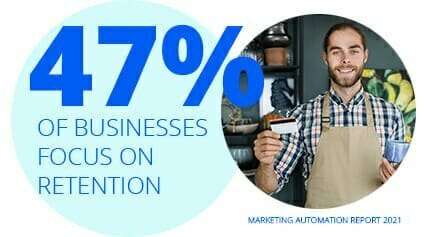
Acquisition gets the budget. Renewals get the leftovers. Not cool.
Yet a 5% increase in retention can boost profits by 20–100%.
If you want to reduce churn in SaaS, retention must be proactive—not an end-of-year scramble. Don’t take me wrong, I love personalized year-in-review videos. They are a powerful tool. However, more often than not, teams don’t take full advantage of the engagement opportunity prior the end-of-year wrap and leave it all to that last bullet.
Therefore, yes, do launch a Spotify-style video to help customers understand the value they have received, but don’t waste prior opportunities to engage with them throughout the year.
The customer retention strategies of 2025 won’t cut it in 2026.
What works instead:
- Renewal reminder videos showing the value the customer achieved.
- Milestone videos (“Your team onboarded 500 users this year!”).
- Tailored education videos highlighting unused features.
Retention is about reinforcing past value and pointing to future gains.
Gap 5: Loyalty Without Advocacy
In B2C, loyalty often means points or discounts. In B2B, it’s about trust and recognition. Both are solid paths.
However, a customer loyalty strategy for B2B requires more than transactions. It requires human connection.
Examples:
- A professional services firm sends a personalized customer thank you video at the end of each year.
- A SaaS provider creates a success video showcasing client achievements and invites them to share it internally.
- A real estate brand sends personalized anniversary videos to past buyers, sparking referrals.
These touches transform satisfied customers into advocates.
[su_box title=”Best Practices” box_color=”#e0fbfc” title_color=”#045ef1″]How to launch for first personalized video campaign fast and safely[/su_box]
How to Apply Personalization Across the Customer Journey (A Practical Framework)
Here’s the challenge: many marketing leaders know personalization matters but don’t know how to put it into practice. It feels abstract.
Here’s a simple framework you can use to design personalized messages across the journey. We use it with our personalized video clients at Pirsonal and it comes after more than a decade of experience helping marketing and CX teams leverage video personalization to engage busy audiences.
Step 1: Identify customer goals and concerns at each stage
- Awareness: discovering options, solving a problem.
- Consideration: narrowing choices, comparing providers.
- Decision: removing doubts and committing.
- Client: maximizing value, feeling appreciated.
Step 2: Clarify your brand’s goals at each stage
For example:
- Awareness: visibility and lead capture.
- Consideration: proof of fit and trust.
- Decision: acquisition through direct channels.
- Client: retention, upsell, referrals.
Step 3: Use the data you have—leverage AI to understand the story behind the data
- Early stage: search terms, location, traffic source.
- Mid stage: downloaded content, chatbot interactions, feature interest.
- Late stage: name, purchase details, booking preferences.
- Client stage: purchase history, loyalty status, usage behavior.
Step 4: Choose the right channel
- Early: website, social media, search ads.
- Mid: email, chatbot, interactive landing page.
- Late: personalized video email, SMS, 1:1 call.
- Client: onboarding videos, personalized landing pages, retention campaigns.
Step 5: Craft contextualized, personalized messages
I love using hotel examples because we’ve all been to one. Here you have an example:
- Awareness: “Looking for hotels in Granada? Here’s a guide to the top cultural attractions.”
- Consideration: “We’re the only hotel within walking distance of the Alhambra. See why travelers choose us.”
- Decision: “Can you picture a private dinner overlooking the Alhambra? Book now and secure your spot.”
- Client: “Welcome back, Mark! Join our guided tour — spots sell out fast.”
The key: you don’t always need a first name to personalize. Contextual data (search term, interest, location) is often just as powerful. And with AI and tools like Pirsonal, you can take that to the very next level. AI helps you craft the right message; video helps you make it extremely relevant and easy to consume.
This framework helps you move from abstract “personalization” to a clear, stage-by-stage plan. With personalized video tools like Pirsonal, you can then automate these messages at scale.
[su_box title=”Trends” box_color=”#e0fbfc” title_color=”#045ef1″]10 steps to building a winning video marketing strategy with personalization[/su_box]
Why Mid-Market Firms Struggle (And How Pirsonal Helps)
By now, you may be thinking:
“This all makes sense, but my team doesn’t have the bandwidth or experience to create personalized videos at scale.”
That’s exactly the challenge mid-market firms face. Expectations are high, resources limited.
Here’s how Pirsonal helps:
- Flexibility: Whether you need 500 videos or 50,000, Pirsonal adapts.
- Partnership: We don’t just hand over ai-powered personalized video software. We help you design templates, connect systems, and even manage campaigns.
- Security: ISO 27001 certified, with US and EU data residency; trusted by marketing, legal, and IT teams with fast procurement approval.
Pirsonal isn’t just software. It’s software plus strategy, guided by a team that walks with you.
Step-by-Step: Building a Journey Strategy That Works in 2026
Here’s a another practical framework to start closing the gaps:
- Map the journey: Identify drop-off points.
- Prioritize: Pick one stage to improve first. Don’t try to do all of them at once.
- Add personalization: Use contextual and customer data; leverage AI to get better context.
- Choose formats that cut through noise: For instance, personalized video is especially effective.
- Automate smartly: Connect CRM, automation, or API workflows.
- Track & refine: Watch metrics and iterate.
You don’t need to overhaul everything at once. Start small, improve one stage, and scale from there.
Final Takeaway: Closing the Gaps, One Customer at a Time
From lead to loyalty, every stage is an opportunity to earn trust—or lose it.
2026 will belong to the marketing and CX teams that create personalized, human experiences at scale. Not louder campaigns. Not gimmicky AI avatars. But thoughtful strategies that help customers feel guided, valued, and connected.
That’s what we do at Pirsonal: help mid-market firms close these gaps without adding headcount or complexity.
Curious where your customer journey is leaking and how to make customer pay attention, engage, and become advocates? Talk to an expert today.