Many B2B teams already collect data that should help audiences like customers, members, partners, accounts, dealers, advisors, franchisees, or resellers understand value.
A customer success team may have usage and adoption data. A membership organization may have participation and impact data. A partner marketing team may have performance and opportunity data. A franchise, dealer, advisor, or reseller network may have account-level results that need to be understood and shared. A sustainability program may have measurable contribution data that proves impact but still needs to be communicated clearly.
The issue is rarely that the data does not exist.
The issue is that the data is often packaged in a format designed to document information, not to help each recipient understand why the information matters to them.
That distinction is important. And expensive.
Here is why:
A report can be accurate and still fail to create action. A dashboard can be useful and still feel disconnected from the recipient’s context. A PDF can provide proof and still leave the reader unsure what they should take away from it.
This is where customer data storytelling becomes valuable.
Your customers do not always need more data. They need to understand what the data means for them.
The Real Problem: The Data-to-Meaning Gap
In the last two decades, I’ve seen a common pattern: many organizations try to solve contact engagement problems by adding more activity.
They send another personalized email. They publish another update. They create another data-rich report. They design another static social asset. They add another timely reminder.
Sometimes that helps. But in many data-heavy B2B communications, the deeper issue is not volume. It is meaning.
At Pirsonal, we often think about this as the data-to-meaning gap: the distance between the information an organization has and the meaning the recipient actually takes from it.
It happens even in the “best families.” Even in personalized video marketing.
That gap usually has four parts:
First, there is the data gap. The organization may have many data points, but the recipient may not see the version that is most relevant to them. For example, a network-level report might show the total impact of a program, but an individual member, dealer, advisor, or partner may still wonder, “What did we contribute?.”
Second, there is the meaning gap. The recipient may see the number, but not understand why it matters. A usage statistic, impact number, benefit value, performance metric, or account-level result only becomes useful when it is connected to a clear interpretation.
Third, there is the emotion gap. The recipient may understand the fact, but not feel anything about it. In many loyalty, renewal, membership, partner, dealer, advisor, or customer communications, that emotional connection matters because the goal is not only awareness. The goal is pride, confidence, appreciation, motivation, trust, or continued participation.
Fourth, there is the action gap. The recipient may receive the message but not know what to do next. If the campaign does not guide the next step, attention may not become engagement, renewal, sharing, booking, registration, referral, upgrade, participation, or another business action.
And when it comes to personalization in B2B marketing, a strong data-driven campaign needs to close more than one of these gaps. It should show the right information, explain why it matters, help the recipient feel connected to it, and make the next step clear.
That is the difference between delivering data and creating meaning. And this is critical for successful customer-centric personalized video marketing.
What Customer Data Storytelling Means in B2B
Customer data storytelling is the process of turning customer, member, partner, account, dealer, advisor, franchisee, or reseller data into a clear narrative that helps each recipient understand their own value, progress, performance, contribution, impact, or next step.
Just in case… It is not the same as data visualization.
It is not simply putting numbers into a nicer chart.
It is not making a PDF more attractive.
Not even a nice-looking personalized video.
Customer data storytelling is about giving the recipient a useful interpretation of their own data—so that they take their next step.
For a customer, that story might be about usage, savings, adoption, progress, milestones, or next steps. For a member, it might be about contribution, participation, impact, status, years of membership, or value received. For a partner, dealer, advisor, franchisee, or reseller, it might be about performance, growth, opportunities, achievements, customer outcomes, referrals, or business development.
However, the data is the raw material. The story is what helps the recipient answer the question that matters most:
“What does this mean for me?”
Most organizations naturally communicate from the inside out. They begin with what they want to report, announce, prove, or summarize.
But the recipient often approaches the message from the outside in. They want to know why it matters to them, what they should take from it, and whether it is worth their attention.
Customer data storytelling helps bridge that difference.
The Format Should Match the Job
A common mistake in customer engagement is assuming that one format should do every job.
Reports, PDFs, dashboards, emails, landing pages, social assets, and personalized videos can all be useful. The question is not which format is “best” in general. The question is which format matches the job of the communication.
Here are some hints:
A report is useful when the audience needs depth, documentation, proof, detail, or a formal record. Reports work well when someone needs to review information carefully or keep it for future reference.
A PDF is useful when the audience needs a portable asset that can be saved, forwarded, printed, or attached to internal communication. PDFs are often useful for official summaries, statements, account reviews, impact reports, or proof documents.
A dashboard is useful when users need ongoing access to changing information. Dashboards are strong when the user expects to return, compare data, filter details, or track progress over time.
An email is useful when the message is simple, timely, transactional, or designed to drive one immediate action. Email can be effective when the audience already understands the context.
A static social asset is useful when one key message needs to be shared quickly, especially when the recipient needs a simple visual they can post or forward.
A personalized landing page is useful when the recipient needs a private, branded place to receive the message, watch a video, download an asset, click a call to action, or continue the journey.
A personalized video is useful when the message needs sequence, context, recognition, emotion, and action. Video can guide the viewer through the meaning of the data, and personalization makes the story relevant to that specific recipient.
This is why the strongest approach is often not video instead of a report.
It is video plus the right supporting asset.
The video creates attention, context, recognition, and momentum. The report, dashboard, PDF, or landing page provides depth, proof, and detail.
When the format matches the job, the campaign becomes easier to understand and easier to act on.
When a Report Needs to Become a Campaign
A report does not need to become a campaign every time. If the goal is documentation, a report may be enough. If the goal is reference, a dashboard may be enough. If the message is simple and the audience already understands the context, an email may be enough.
A report starts to need a campaign when the communication is tied to a business outcome and the audience needs to understand, remember, share, or act on the information.
This happens often in B2B moments such as customer value recaps, member impact updates, partner performance summaries, account reviews, dealer performance updates, advisor or reseller recaps, franchisee updates, sustainability impact campaigns, renewal communications, loyalty campaigns, annual updates, and year-in-review campaigns.
In these moments, the question is not only, “Can we send the information?”
The better question is, “Will the recipient understand why this information matters enough to do something with it?”
If a customer is approaching renewal, they may need to see the value they received, not just receive another usage report. If a member is deciding whether to stay engaged, they may need to see their role in the program, not only the organization’s annual results. If a partner needs to communicate value to their own customers, they may need a story they can reuse, not just internal performance data.
This is why data storytelling is so closely connected to loyalty, renewals, engagement, and advocacy. People are more likely to act when they understand the value, progress, contribution, or impact behind the numbers.
Why Personalized Video Works for Data Storytelling
Personalized video is useful when data needs to become easier to follow, easier to understand, and easier to connect with.
A static report can show many data points at once, but it often asks the recipient to do the interpretive work. They have to read, compare, infer, and decide what matters.
Video can guide that interpretation. It can create a sequence: where the person or account started, what happened, what changed, what they achieved or contributed, why it matters, and what they should do next.
Personalization makes that sequence relevant. The viewer is not only watching a generic brand message. They are seeing their own account, activity, progress, impact, results, or next step reflected in the story.
This matters because many B2B marketing campaigns are not trying to entertain. They are trying to clarify value.
For example, personalized recap video can help say:
- Here is what you achieved.
- Here is what you used.
- Here is what you saved.
- Here is what you contributed.
- Here is the impact you helped create.
- Here is what your membership made possible.
- Here is how your partnership performed.
- Here is what your account should do next.
That level of relevance is difficult to create with a generic video or static document alone.
Personalized video is especially useful when the data has commercial or strategic weight: customer success, membership value, partner performance, dealer engagement, advisor communication, reseller enablement, sustainability contribution, loyalty status, or renewal readiness.
In these situations, the goal is not to make the data look more exciting. The goal is to make the meaning more obvious.
What B2B Teams Can Learn From Spotify Wrapped
Spotify Wrapped is often used as a reference point for personalized recap video campaigns. That makes sense. Every year, Spotify turns personal listening data into a story people recognize, remember, and share.
But B2B teams should be careful about what they copy.
The useful part of Spotify Wrapped is not the colors, animations, or slide format. The useful part is the emotional mechanism.
Spotify Wrapped works because it takes data that could have been shown in a dashboard and turns it into a story that feels personal. People share it because it says something about them.
That principle can apply beyond consumer entertainment.
For example, a customer recap can show value received. A member recap can show participation and impact. A partner recap can show performance and opportunity. A dealer recap can show activity, growth, or customer outcomes. A franchisee or reseller recap can show progress, contribution, and next steps.
The best B2B Spotify Wrapped-style campaigns do not imitate Spotify.
They use the same underlying idea: turn personal or account-level data into a story the recipient recognizes as their own.
That is why these campaigns are often more useful when they are tied to real business moments: renewals, retention, loyalty, engagement, advocacy, partner enablement, customer success, account growth, or member participation.
The format can be engaging. But the purpose should be practical.
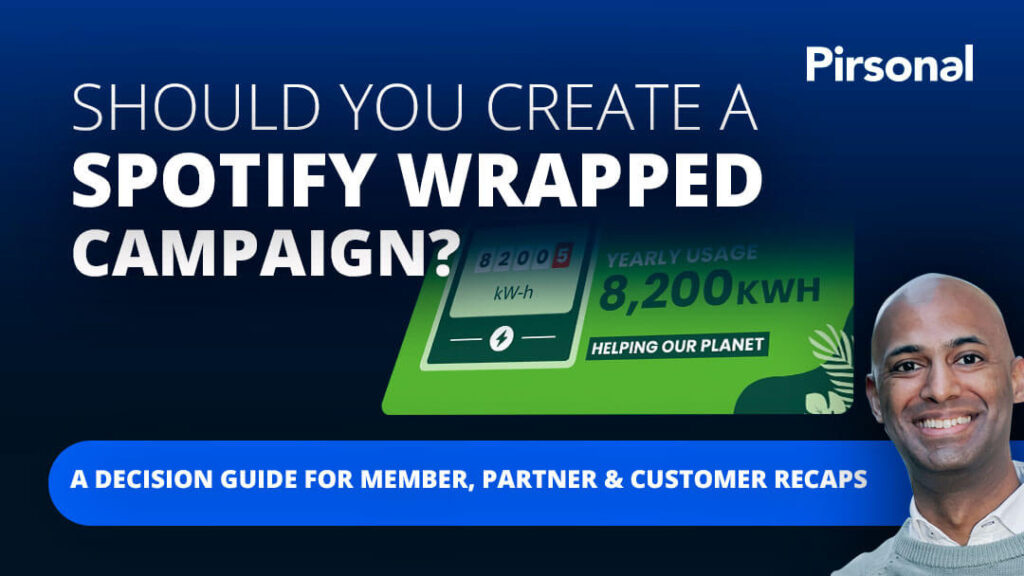
Use this decision guide to know when a Spotify Wrapped-style campaign is worth it, what data you need, and when personalized video works better than a PDF report.
What Sustainable Salons Shows in Practice
Sustainable Salons is a profit-for-purpose organization in Australia and New Zealand that helps salons and related businesses reduce waste and create measurable environmental impact.
Their members include salons and related businesses that participate in a program designed to divert materials from landfill and create positive environmental outcomes. Throughout the year, those businesses contribute to measurable results across categories such as hair, metals, plastics, paper, chemicals, and other impact-related areas.
Before working with Pirsonal, Sustainable Salons already had meaningful data. They already had a story worth telling. They already used assets such as personalized impact certificates and static social media tiles so members could communicate their contribution.
Those assets had value. They were not wrong.
But as the program grew, the team needed a richer way to help each member understand their own role in the larger sustainability story and share that story with their own clients.
That is a different communication challenge from publishing a general network impact report.
A network-level report can say, “Here is what our organization achieved.” A personalized member experience can help say, “Here is what your business helped make possible.”
For Sustainable Salons, the campaign combined several important ingredients.
First, the data was personally meaningful. Each member had impact data connected to their own participation.
Second, the creative frame was clear. Spotify Wrapped helped the team describe the kind of personalized recap experience they wanted to create, without needing to copy Spotify’s visual identity.
Third, the workflow respected how the client already worked. Sustainable Salons used Canva for the base creative, which made it easier for the team to prepare, review, and approve the visual direction.
Fourth, the campaign used structured data and segmentation. The campaign included different segments, with personalization fields such as account name, year of membership, kilograms of hair, metals, plastics, paper, trolleys, trees, and other impact-related values.
Fifth, the experience included more than the video. Personalized landing pages helped frame the message before the video was watched, and interactive video calls to action helped members share or download the asset.
This is what separates a personalized video from a personalized video campaign.
The campaign was not only about rendering videos at scale. It was about turning structured member data, approved creative, delivery experience, and a clear next step into a message that members could understand and share.
Read the full case study here →
You’ll learn how Sustainable Salons launched a Spotify Wrapped-style personalized impact report video to increase member participation, social sharing, and measurable engagement across its network.
That is the practical lesson for B2B teams.
When data is meaningful but dense, and when the audience needs to feel personally connected to the result, the campaign needs more than a static asset. It needs a guided experience that makes the meaning clear.
The 5-Question Data Storytelling Test
Now, before turning a report, dashboard, or customer update into a personalized campaign, it helps to test whether the idea has enough substance.
A personalized video campaign is usually worth exploring when the answer to most of these questions is yes.
1. Is the data personal enough?
The data does not need to be complex, but it should change by recipient, account, member, partner, dealer, advisor, franchisee, reseller, or segment. If everyone receives the same information, a generic video, report, or landing page may be enough.
Personalized video becomes more useful when each viewer can see something that clearly belongs to them: their name, account, progress, usage, contribution, results, status, location, recommendations, or next step.
2. Is the data meaningful enough?
Not all personalized data deserves a campaign. A name field alone is not enough. The data should reveal something useful: value received, progress made, impact created, rewards earned, goals reached, actions completed, milestones achieved, business outcomes, or opportunities available.
The question is not only, “Can we personalize this?”
The better question is, “Will the recipient care when they see it?”
3. Is the current format underperforming the job?
Reports, PDFs, dashboards, emails, and static assets may be accurate, but accuracy does not guarantee understanding. If the current format is too dense, too static, too generic, or too easy to ignore, the data may need a stronger narrative format.
This is especially true when the campaign needs the recipient to remember the message, share it, or take action.
4. Is there a business moment behind the communication?
Personalized video works best when there is a clear reason for the message to matter now. That might be a renewal cycle, annual recap, impact report, member campaign, customer success update, account review, partner review, dealer update, loyalty campaign, or year-end message.
The business moment gives the campaign urgency and purpose.
5. Is there a clear next step?
A personalized video should not end with “nice video.” It should guide the viewer toward the next useful action.
That action might be renewing, sharing, registering, booking, downloading, referring, upgrading, completing a task, visiting a landing page, or continuing participation.
If there is no next step, the campaign may still create awareness, but it may struggle to create measurable business value.
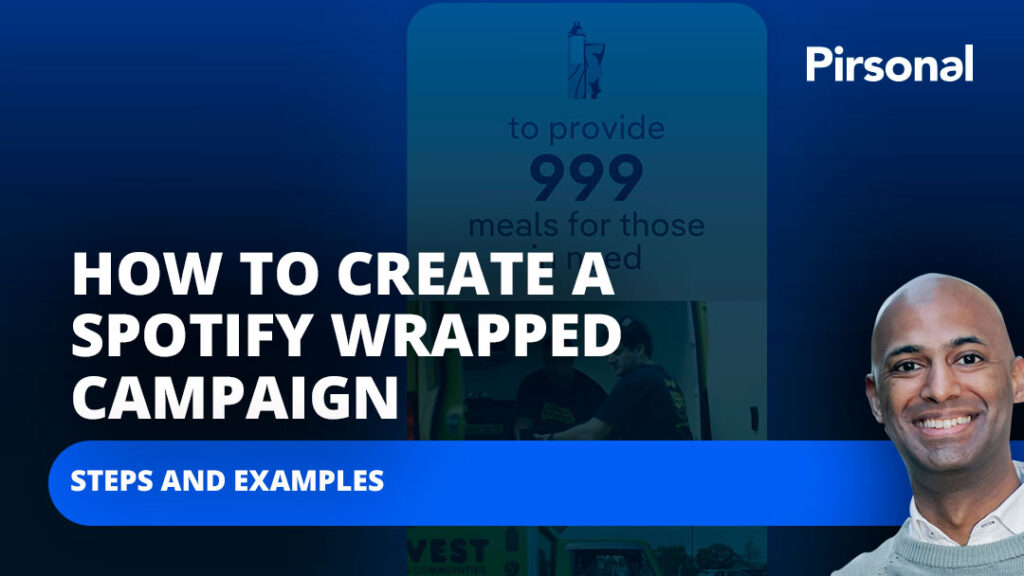
Make sure to read this guide to learn how to create a Spotify Wrapped-style campaign using customer, member, or impact data, with lessons from Sustainable Salons’ personalized video case study.
What Teams Need Before Building a Personalized Data Story
A personalized video campaign is not only a creative project. It is a strategy, data, creative, delivery, security, and quality-control project.
That does not mean it needs to be overwhelming. It means the right questions should be answered before production begins.
Teams should clarify the audience first. Who will receive the campaign? Are they customers, members, partners, accounts, dealers, advisors, franchisees, resellers, or another business audience? Are there segments that need different messaging, creative, or data fields?
Next, define the campaign goal. Is the purpose engagement, renewal, loyalty, education, sharing, activation, advocacy, recognition, retention, or a specific conversion action?
Then review the data. What source will the data come from? Is it a spreadsheet, CRM, marketing automation platform, API, database, form submission, or another system? Which fields are essential? Which fields are optional? What fallback values are needed if data is missing?
Creative assets also matter. Some teams already have brand assets, scripts, videos, Canva files, After Effects projects, presentation materials, or approved campaign language. Others need help developing the creative concept from the beginning.
The delivery path should be defined early. Will the video be delivered by email, SMS, WhatsApp, direct mail, QR code, CRM workflow, portal, or a personalized landing page? Does each recipient need a private page? Should the page include a download button, form, CTA, report, or next-step link?
Security and privacy should also be part of the planning process, especially when customer, account, financial, insurance, membership, or regulated data is involved. Teams should consider data minimization, secure URLs, access control, hosting, retention, deletion, approval workflows, and compliance requirements.
Finally, quality assurance needs ownership. Someone should review test videos, landing pages, data mapping, fallback values, CTAs, tracking, and delivery before the campaign goes live.
These details are not barriers. They are what make the campaign trustworthy.
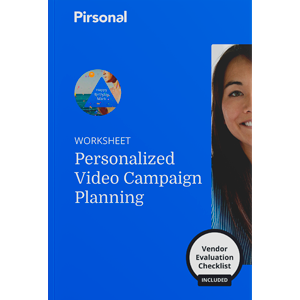
Make Sure Your Campaign Is Ready Before You Talk to a Vendor
A Spotify Wrapped-style campaign can be a great idea. But if the goal, data, creative assets, CTA, security needs, and approval process are unclear, the project can slow down quickly. Use this checklist to see what you already have, what is missing, and what a personalized video vendor will need to know before giving useful advice. Download the checklist and prepare your campaign with more confidence.
When Personalized Video Is Not the Right Fit
Personalized video is powerful, but it is not always the right answer.
It may not be necessary when the message is purely transactional, such as a simple confirmation, reminder, or receipt. It may not be the best format when the recipient needs to compare many detailed fields, analyze complex data, or use the information as a formal record. In those cases, a report, table, dashboard, or PDF may be more useful.
After more than a decade helping brands with personalized video campaigns, I can also say personalized video may also be a poor fit if the data is not meaningful enough. Adding someone’s name to a generic message does not create a strong personalized experience. If the data does not help the recipient understand value, progress, contribution, impact, performance, or a next step, the campaign may feel superficial.
It may also be better to wait if the data is unreliable, the approval process is unclear, the timeline is unrealistic, or the campaign has no defined action after the video.
This is why the first step should not always be “build the video.”
The first step should be assessing whether the campaign has the right audience, data, story, timing, and next step.
A good personalized video partner should be willing to tell you when a simpler format is enough.
How Pirsonal Helps Teams Turn Data Into Campaigns
Pirsonal helps B2B teams turn customer, member, partner, account, dealer, advisor, franchisee, reseller, or impact data into secure, on-brand personalized video campaigns.
The platform supports personalized videos, personalized landing pages, interactive calls to action, analytics, and flexible data workflows. Campaigns can be created from spreadsheets, integrations, APIs, or other structured data sources, depending on the team’s needs.
But software alone is not the whole story.
Many teams come to Pirsonal because they have a strong campaign idea but need help turning it into something practical. That can include clarifying the use case, identifying the right data points, preparing templates, setting up personalized landing pages, adding calls to action, generating videos, testing the experience, and reviewing campaign performance.
This support is especially useful for teams that have limited time, limited technical resources, or no prior experience with personalized video campaigns.
The goal is not to make the campaign more complex.
The goal is to help teams launch a campaign that is clear, relevant, secure, on brand, and connected to a real business outcome.
If your team already has a report, recap, dashboard, statement, or update that people should understand more clearly, Pirsonal can help you assess whether personalized video makes sense.

Before Your Next Report, Ask a Better Question
Before your next customer report, member recap, partner update, account review, dealer summary, advisor recap, reseller update, renewal communication, impact report, or year-in-review campaign, it is worth asking a better question.
Not only:
“What do we need to communicate?”
But also:
“How do we help each recipient understand what this means for them?”
That question changes the campaign.
It changes the format. It changes the data you choose. It changes the landing page. It changes the call to action. It changes how you measure success.
Most importantly, it changes whether the audience simply receives the message or sees themselves in the story.
Your customers do not need more data.
They need to understand what the data means.
And when the message is important enough to drive loyalty, renewals, sharing, engagement, or action, that understanding may be the most valuable part of the campaign.
Bring Us One Campaign Idea
Have a customer, member, partner, account, dealer, advisor, franchisee, reseller, or impact update where the data matters, but the story needs to land more clearly?
Pirsonal can help you assess whether personalized video is the right fit.
Bring us one campaign idea. We will help you understand what is possible, what data you need, what the experience could look like, and whether a personalized video campaign makes sense before you commit to building anything.
Talk to a Pirsonal expert today →
FAQ
- How to create a Spotify Wrapped-style campaign: Plan the data, story, creative, and sharing experience.
- Sustainable Salons personalized video case study: See how one member-based organization used personalized impact videos in practice.
- Personalized year-in-review video campaigns: Explore how Pirsonal helps teams turn customer, member, or partner data into personalized recap videos.
- Talk to a Pirsonal expert: Review your campaign idea, data, and next steps with our team.